
Author: Eva Penín
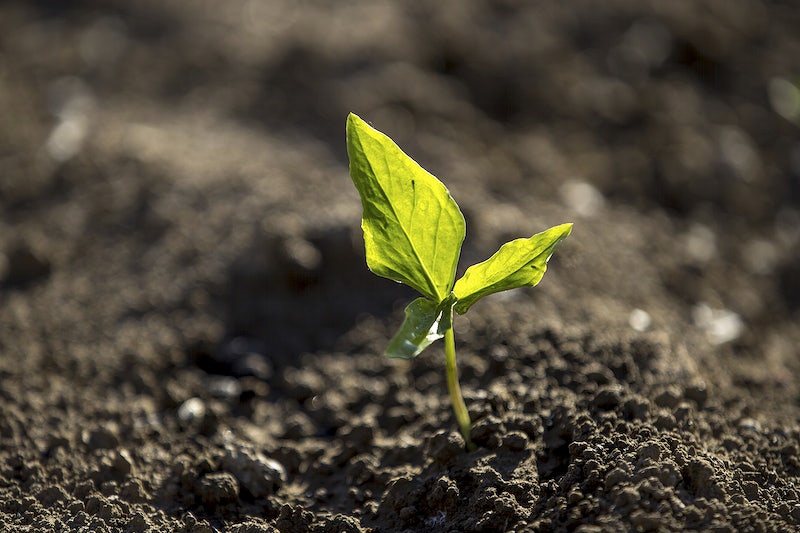
Biochar is a carbon-rich material produced from organic feedstock through thermal decomposition under oxygen-limited conditions[1]. It has gained a significant attention in recent years due to its potential as a soil amendment capable of improving soil quality and enhancing crop yields. Its unique physicochemical properties—including high porosity, large surface area, and strong nutrient and water retention capacity, among others[2],[3],[4],[5]—make biochar particularly valuable in agricultural soils, especially those that are degraded or nutrient-poor[6]
Beyond these physicochemical properties, biochar also supports biological processes in soil. It promotes the growth and activity of beneficial microbial communities and soil enzymes and can contribute to the suppression of soil-borne pathogens[7]. As a result, biochar use in agriculture often leads to increased the crop yields through improved nutrient use efficiency and overall soil fertility[8]. For instance, its ability to increase soil organic carbon and provide a stable environment for beneficial microorganisms supports better plant growth and resilience to environmental stresses, such as drought[9]. Additionally, biochar’s capacity to capture and store atmospheric carbon in recalcitrant form in the soil contributes to climate change mitigation, making it a promising tool for sustainable agriculture[10],[11]. Indeed, biochar is rapidly emerging as one of the most scalable and robust Carbon Dioxide Removal (CDR) techniques, as emission reduction alone is no longer sufficient to meet global climate targets. Its ability to capture and stabilise atmospheric carbon in a recalcitrant form within soils supports both sustainable agriculture and long-term climate mitigation. Among current CDR approaches — Carbon Capture and Storage (BECCS), Direct Air Capture and Storage (DACS), or Biochar Carbon Removal (BCR)— biochar stands out as the most technically advanced and cost-effective option, representing 87% of all permanent carbon removal deliveries in the voluntary carbon market last year[12].
Even though biochar has multiple advantages, its efficacy varies based on a number of variables, including the kind of feedstock utilised, the conditions of pyrolysis, and the properties of the soil. To maximise the potential of biochar in enhancing soil health and increasing crop output across various agricultural systems, it is imperative to comprehend these characteristics[13]. Furthermore, its long-term credibility requires progress on persistent challenges, including methodology standardisation, quality variability, Monitoring, Reporting, and Verification (MRV) robustness, real market uptake, and closing the investment gap in production capacity.
Even though it is sometimes presented as an emerging climate solution, biochar has an important history that dates back thousands of years. Soils worldwide contain biochar deposited by natural events, such as forest and grassland fires[14], and archaeological evidence shows that ancient civilisations used charred organic matter to enrich soils long before the term “biochar” was coined[15]. The most widely studied example comes from the Amazon Basin, where pre-Columbian cultures created the highly fertile Terra Preta soils by incorporating charcoal and organic residues—systems that remain productive today despite intense tropical rainfall and centuries of leaching[16],[17],[18],[19]. Similar practices have long existed in Japan and Korea, where the use of charred biomass in the agriculture is part of traditional farming systems[20]. This long-standing history highlights that biochar is not a modern invention, but rather an ancient biobased material whose remarkable stability and capacity to improve soil structure, nutrient retention, and long-term fertility have been recognised for millennia.
The renewed scientific and commercial interest of the 21st century has reconnected with these historical practices of biochar use, now reevaluated as a powerful tool for sustainable agriculture and carbon sequestration. Furthermore, recent research is expanding its potential applications to various fields of global relevance today, such as waste management, renewable energy production, water treatment, and its use as livestock feed [21],[22],[23].
At the EMBEDED project, we are aiming to improve the European knowledge about the multiple uses of biochar and its potential. If you want to read more about the EMBEDED’s topics, stay tuned!
[1] Lehmann, J., Gaunt, J., & Rondon, M. (2006). Bio-char sequestration in terrestrial ecosystems–a review. Mitigation and adaptation strategies for global change, 11(2), 403-427.
[2] Haider, F. U. et al. An overview on Biochar production, its implications, and mechanisms of Biochar-induced amelioration of soil and plant characteristics. Pedosphere 32, 107–130 (2022).
[3] Malyan, S. K., Kumar, S. S., Fagodiya, R. K., Ghosh, P., Kumar, A., Singh, R., & Singh, L. (2021). Biochar for environmental sustainability in the energy-water-agroecosystem nexus. Renewable and Sustainable Energy Reviews, 149, 111379.
[4] Hussain, Z., Khan, N., Ullah, S., Liaqat, A., Nawaz, F., Khalil, A. U. R., … & Ali, M. (2017). Response of mung bean to various levels of biochar, farmyard manure and nitrogen. World J Agric Sci, 13(1), 26-33.
[5] Adekiya, A.O., Ogunbode, T.O., Esan, V.I. et al. Short term effects of biochar on soil chemical properties, growth, yield, quality, and shelf life of tomato. Sci Rep 15, 24965 (2025). https://doi.org/10.1038/s41598-025-10411-5
[6] Lehmann, J. & Joseph, S. Biochar for Environmental Management: Science, Technology and Implementation (Earthscan, 2015).
[7] Bonanomi, G., Ippolito, F., Cesarano, G., Nanni, B., Lombardi, N., Rita, A., … & Scala, F. (2017). Biochar as plant growth promoter: better off alone or mixed with organic amendments?. Frontiers in Plant Science, 8, 1570.
[8] Alkharabsheh, H. M., Seleiman, M. F., Battaglia, M. L., Shami, A., Jalal, R. S., Alhammad, B. A., … & Al-Saif, A. M. (2021). Biochar and its broad impacts in soil quality and fertility, nutrient leaching and crop productivity: A review. Agronomy, 11(5), 993.
[9] Mansoor, S., Kour, N., Manhas, S., Zahid, S., Wani, O. A., Sharma, V., … & Ahmad, P. (2021). Biochar as a tool for effective management of drought and heavy metal toxicity. Chemosphere, 271, 129458.
[10] Woolf, D., Amonette, J. E., Street-Perrott, F. A., Lehmann, J., & Joseph, S. (2010). Sustainable biochar to mitigate global climate change. Nature communications, 1(1), 56.
[11] Lorenz, K., & Lal, R. (2014). Biochar application to soil for climate change mitigation by soil organic carbon sequestration. Journal of plant nutrition and soil science, 177(5), 651-670.
[12] Chiaramonti, D., Lehmann, J., Berruti, F. et al. Biochar is a long-lived form of carbon removal, making evidence-based CDR projects possible. Biochar 6, 81 (2024). https://doi.org/10.1007/s42773-024-00366-7 .
[13] Adekiya, A. O., Ogunbode, T. O., Esan, V. I., Adedokun, O., Olatubi, I. V., & Ayegboyin, M. H. (2025). Short term effects of biochar on soil chemical properties, growth, yield, quality, and shelf life of tomato. Scientific Reports, 15(1), 24965.
[14] Hunt, J., DuPonte, M., Sato, D., & Kawabata, A. (2010). The basics of biochar: A natural soil amendment. Soil and Crop Management, 30(7), 1-6.
[15] Lehmann, J. et al. Classification of Amazonian dark earths and other ancient anthropic soils. In Amazonian Dark Earths: Origin, Properties, Management (eds Lehmann, J., Kern, D. C., Glaser, B. et al.) 77–102 (Springer, 2007).
[16] Solomon, D., Lehmann, J., Thies, J., Schäfer, T., Liang, B., Kinyangi, J., … & Skjemstad, J. (2007). Molecular signature and sources of biochemical recalcitrance of organic C in Amazonian Dark Earths. Geochimica et cosmochimica Acta, 71(9), 2285-2298.
[17] Kamarudin, N. S., Dahalan, F. A., Hasan, M., An, O. S., Parmin, N. A., Ibrahim, N., … & Wikurendra, E. A. (2022). Biochar: A review of its history, characteristics, factors that influence its yield, methods of production, application in wastewater treatment and recent development. Biointerface Res. Appl. Chem, 12(6), 7914-7926.
[18] Kämpf, N., Woods, W. I., Sombroek, W., Kern, D. C., & Cunha, T. J. (2003). Classification of Amazonian Dark Earths and other ancient anthropic soils. In Amazonian Dark Earths: Origin Properties Management (pp. 77-102). Dordrecht: Springer Netherlands.
[19] Lehmann, J., Kern, D. C., Glaser, B., & Woods, W. I. (Eds.). (2006). Amazonian dark earths: origin properties management.
[20] Hunt, J.; Duponte, M.; Sato, D.; Kawabata, A. The Basics of Biochar: A Natural Soil Amendment. Soil Crop Manag. 2010, 30, 1–6.
[21] Schmidt, H. P., Hagemann, N., Draper, K., & Kammann, C. (2019). The use of biochar in animal feeding. PeerJ, 7, e7373.
[22] He, M., Xu, Z., Hou, D., Gao, B., Cao, X., Ok, Y. S., … & Tsang, D. C. (2022). Waste-derived biochar for water pollution control and sustainable development. Nature Reviews Earth & Environment, 3(7), 444-460.
[23] Anokye, K. (2024). From waste to wealth: Exploring biochar’s potential in energy generation and waste mitigation. Cleaner and Circular Bioeconomy, 9, 100101.