
Author: Eva Penín
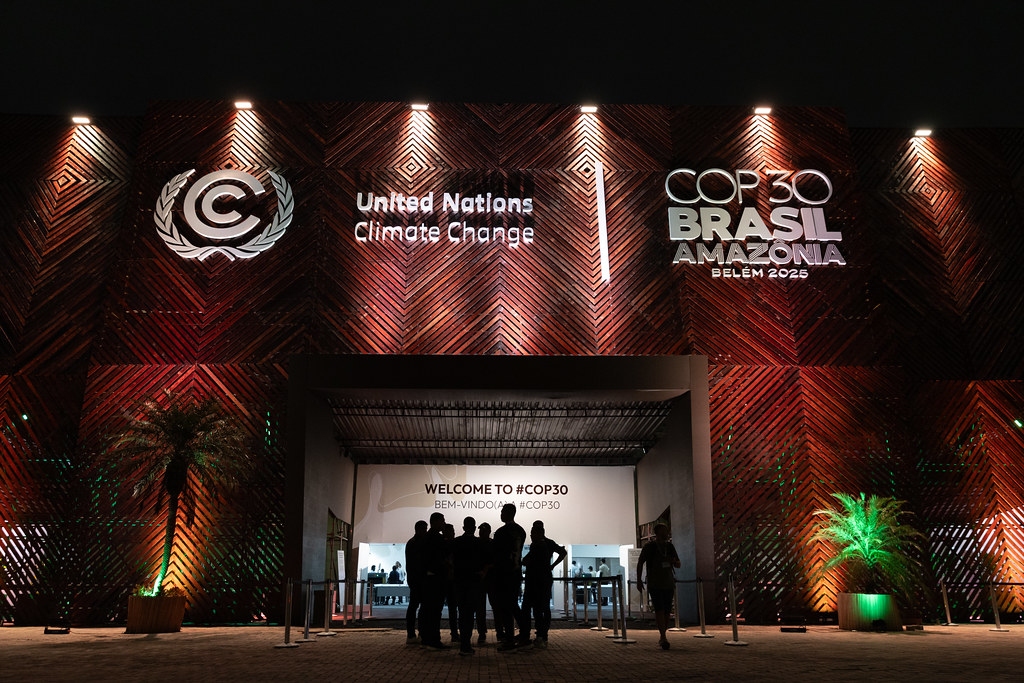
The 30th United Nations Climate Change Conference – Conference of the Parties (COP30), held in Belém during November 2025, marked a turning point in global climate action. For the first time, durable carbon dioxide removal (DCR)[1] was fully incorporated into the international agenda as an essential component for meeting the Paris Agreement (2015). This recognition comes at critical moment, as, according to the latest UNEP Emissions Gap Assessment, the margin for keeping global warming below 1.5°C has been reduced to virtually zero, and a period of temporary overshoot[2] appears inevitable in the next decade. In this scenario, technologies capable of removing CO₂ from the atmosphere and storing it stably become essential.
Among the existing durable carbon removal (DCR) solutions (e.g., forestation, soil carbon enhancement, or wetland restoration), biochar stands out as the most established and scalable option currently available. It is also one of the technologies with the highest technology readiness level (TRL 8–9 for industrial-scale applications in verified projects), capable of delivering long-term carbon permanence on timescales aligned with climate-mitigation requirements[3],[4]. Its principle is straightforward yet highly effective; biomass is thermally decomposed under oxygen-limited conditions in a process called pyrolysis, converting the carbon contained in agricultural or forestry residues into a stable, solid form that can remain sequestered in soils for centuries[5]. Although this proces has been understood for decades, the combination of technical maturity, operational flexibility, and significant co-benefits—such as soil improvement, waste valorisation, and pollutant immobilisation—has brought biochar to the forefront of scientific research and commercial interest.
The political momentum generated by COP30 has aligned with emerging global initiatives aimed at accelerating the deployment of DCR technologies. The most significant has been the launch of CDR Mutirão, a cooperative platform that aims to mobilise business demand, promote public policies, and facilitate the industrial integration of DCR in sectors such as agriculture, wastewater, biomass or waste treatment. Alongside this, the Granary of Solutions platform focuses on identifying proven climate solutions ready for scaling, while the Energy Efficiency De-Risking Platform seeks to attract investment in energy efficiency by reducing the perceived risk for the financial sector. These three collaborative platforms, presented to accelerate carbon removal implementation towards 2030, reflect the need to move from experimentation to real, rapid, and verifiable implementation.
In this context, biochar stands out not only for its effectiveness but also for its ability to offer simultaneous benefits. In addition to its direct climate impact—accounting for over 90% of all global durable soil removals in the last two years[6]—biochar offers significant agronomic benefits, such as improved soil fertility, water retention, and reduced nutrient leaching[7]. Furthermore, important research demonstrates its ability to immobilise heavvy metals[8],[9],[10],[11] enhancing food security in regions where soil contamination is a growing challenge.
The growth of the biochar sector is supported by increasing market confidence. In this sense, recently, certification bodies such as Puro.earth and Verra have developed robust MRV (monitoring, reporting, and verification) methodologies for biochar-based CDR, and projects like Carbonity (Canada’s largest industrial-scale biochar plant) have already delivered verified removal credits to major corporate buyers such as Microsoft[12]. Unlike other, more emerging and higher-cost technologies, biochar combines economic viability with a real and measurable climate impact. However, it remains essential to avoid conveying the idea that the market is already fully consolidated: the sector still faces structural challenges, including limited supply, fragmentation among producers, dependence on a small number of corporate buyers, and significant capital requirements for deploying industrial pyrolysis infrastructure. These dynamics underline that biochar, despite its maturity relative to other DCR approaches, is still in a transition toward broader industrial and financial stability.
Despite these challenges, emerging trends point toward a new phase of expansion by integrating more investor-attracting models that combine biochar with energy production or waste management[13]; producers’ associations for collective negotiation; and industry standardisation is progressing rapidly, facilitating scalability and reducing verification costs. All of this suggests that biochar is entering a stage of industrial maturity.
Scientific activity is keeping pace with this growth. Studies in Europe, Latin America, and Asia are delving into carbon stability, pyrolysis optimisation, and the effects of biochar on agricultural soils. In Peru, for example, recent trials from Inspiratus Technologies are analysing how biochar can help immobilise heavy metals in soils used for high-value crops such as cacao, reducing risks for producers and consumers.
Looking to the immediate future, biochar will play a prominent role in numerous discussion forums. Events such as
Global Biochar Commercialisation Summit (UK, 2026), Scaling Biochar to Climate Relevance (Austria, 2026), the World Congress of Soil Science (China, 2026), and conferences focused on the circular bioeconomy (Building the Circular Bionutrient Economy, 3rd December) will offer opportunities to connect research, industry, and the agricultural sector. The growing presence of this material in international forums confirms that its adoption no longer depends solely on agricultural niches, but rather on a broader and more coherent global climate strategy.
In short, biochar has gone from being an emerging proposal to becoming a consolidated, viable, scalable, and scientifically supported climate tool. Its capacity to offer long-lasting carbon removal, generate environmental benefits, and create economic opportunities makes it a key ally in the transition to climate neutrality.
Within this dynamic landscape, the Horizon Europe EMBEDED project occupies a strategic position by promoting the development of innovative biomass solutions, including biochar, and by strengthening its integration into European value chains. EMBEDED works to characterise raw materials, optimise production processes, assess environmental impacts using Life Cycle Assessment (LCA), and develop sustainability models and economic analyses that enable the scaling of these technologies with scientific rigour and industrial viability. This contributes directly to filling key knowledge gaps in Europe, providing robust scientific and economic evidence that supports policymakers, industries, and land managers in making informed decisions on the adoption of biochar and biomass-based climate solutions.
Furthermore, the project connects research, industry, and the public administration to generate solid and applicable evidence, aligned with the European Union’s climate objectives and the real needs of farmers, forest managers, and companies interested in implementing biomass and biochar-based solutions.
To stay informed about the latest biochar news and events, and the latest outcomes of EMBEDED’s work, we invite you to follow us on social media and explore the newest publications.
Biochar’s future is already in progress, and EMBEDED is actively accelerating it.
———————–
[1] Erbach, G., & Andreo Victoria, G. (2021). Carbon dioxide removal: Nature‑based and technological solutions (EPRS Briefing, PE 689.336). European Parliamentary Research Service. https://www.europarl.europa.eu/RegData/etudes/BRIE/2021/689336/EPRS_BRI(2021)689336_EN.pdf
[2] Reisinger, A., Fuglestvedt, J. S., Pirani, A., Geden, O., Jones, C. D., Maharaj, S., Poloczanska, E. S., Morelli, A., Johansen, T. G., Adler, C., … (2025). Overshoot: A conceptual review of exceeding and returning to global warming of 1.5 °C. Annual Review of Environment and Resources, 50, 185–217. https://doi.org/10.1146/annurev-environ-111523-102029
[3] Chiaramonti, D., Lehmann, J., Berruti, F. et al. Biochar is a long-lived form of carbon removal, making evidence-based CDR projects possible. Biochar 6, 81 (2024). https://doi.org/10.1007/s42773-024-00366-7
[4] Tisserant, A., & Cherubini, F. (2019). Potentials, limitations, co-benefits, and trade-offs of biochar applications to soils for climate change mitigation. Land, 8(12), 179.
[5] Varkolu, M., Gundekari, S., Omvesh, Palla, V. C. S., Kumar, P., Bhattacharjee, S., & Vinodkumar, T. (2025). Recent advances in biochar production, characterization, and environmental applications. Catalysts, 15(3), 243.
[6] CDR.fyi. (2025, 9th September). Biochar Carbon Removal Market Snapshot | 2025. https://www.cdr.fyi/blog/biochar-carbon-removal-market-snapshot-2025
[7] Alkharabsheh, H. M., Seleiman, M. F., Battaglia, M. L., Shami, A., Jalal, R. S., Alhammad, B. A., … & Al-Saif, A. M. (2021). Biochar and its broad impacts in soil quality and fertility, nutrient leaching and crop productivity: A review. Agronomy, 11(5), 993.
[8] Chen, D.; Liu, X.; Bian, R.; Cheng, K.; Zhang, X.; Zheng, J.; Joseph, S.; Crowley, D.; Pan, G.; Li, L. Effects of biochar on availability and plant uptake of heavy metals—A meta-analysis. J. Environ. Manag. 2018, 222, 76–85.
[9] Wang, Y., Wang, H. S., Tang, C. S., Gu, K., & Shi, B. (2022). Remediation of heavy-metal-contaminated soils by biochar: a review. Environmental Geotechnics, 9(3), 135-148.
[10] Irfan, M., Mudassir, M., Khan, M. J., Dawar, K. M., Muhammad, D., Mian, I. A., … & Dewil, R. (2021). Heavy metals immobilization and improvement in maize (Zea mays L.) growth amended with biochar and compost. Scientific Reports, 11(1), 18416.
[11] Ghandali, M. V., Safarzadeh, S., Ghasemi-Fasaei, R., & Zeinali, S. (2024). Heavy metals immobilization and bioavailability in multi-metal contaminated soil under ryegrass cultivation as affected by ZnO and MnO2 nanoparticle-modified biochar. Scientific Reports, 14(1), 10684.
[12] SUEZ. (2025, 23rd May). Inauguration of Carbonity, Canada’s largest industrial‑scale biochar plant: a concrete solution for soil regeneration and carbon sequestration. SUEZ. https://www.suez.com/en/news/press-releases/inauguration-carbonite-canada-s-largest-biochar-plant s
[13] Anokye, K. (2024). From waste to wealth: Exploring biochar’s potential in energy generation and waste mitigation. Cleaner and Circular Bioeconomy, 9, 100101.